What each cleaning model is built to do
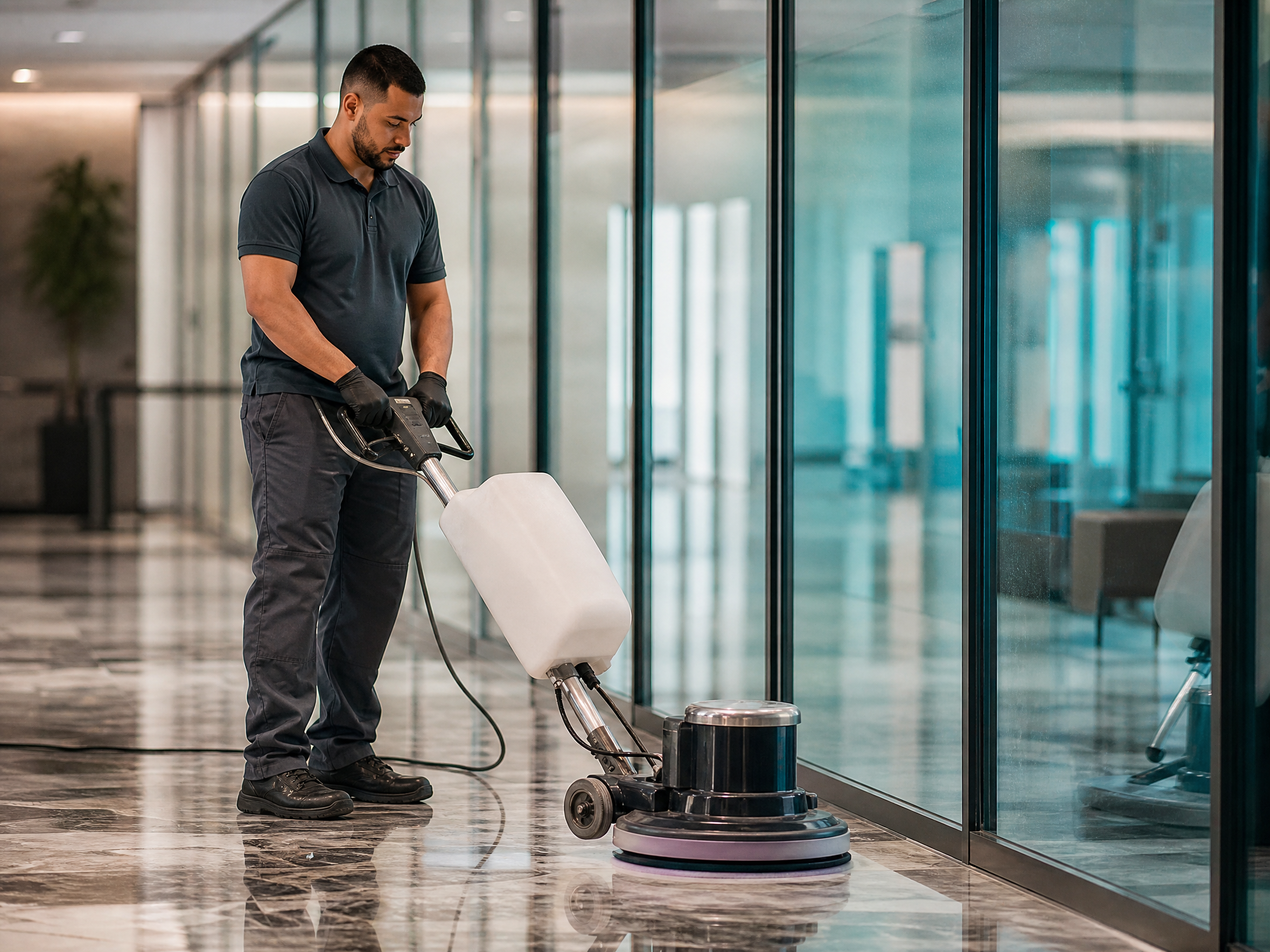
After-hours cleaning happens when the building is quiet or largely unoccupied. The crew can reset offices, restrooms, breakrooms, floors, trash areas, and other agreed spaces with fewer interruptions. This model fits facilities that want a consistent closeout before the next workday and can provide secure access during a defined service window.
A day porter works during operating hours and stays focused on visible, repeat needs. Depending on the scope, that can include restroom checks, paper-product replenishment, entry and lobby touch-ups, spot cleaning, trash attention, and reporting conditions that need a scheduled detail visit. The role supports the facility while employees, tenants, customers, or visitors are present; it does not automatically replace the after-hours clean.
For a plan that fits your operation, explore our janitorial services and commercial cleaning coverage in Resort Corridor.
- After-hours: scheduled reset, quieter work, and broader routine coverage.
- Day porter: visible presence, quick touch-ups, and daytime replenishment.
- Hybrid: porter coverage for active hours plus after-hours cleaning for the full reset.
Match coverage to traffic and facility priorities
After-hours service is often a practical starting point for offices, professional suites, and facilities where most cleaning can wait until occupants leave. It also gives the crew a clear route through less-disrupted spaces. Ask how access, alarms, elevators, locked rooms, and exceptions will be handled before setting the schedule.
Day porter coverage becomes more valuable when conditions change throughout the day. A busy lobby, multi-tenant property, fitness facility, retail site, or visitor-focused operation may need someone to respond to tracked-in dust, restroom supply gaps, spills, or presentation issues before the evening visit. CDC guidance recommends considering surface touch and traffic when setting cleaning frequency, while healthcare, food-service, and childcare environments may have additional facility-specific practices.
Build a scope that prevents coverage gaps
Start with a map of the day. Note opening and closing times, peak visitor periods, high-touch areas, restrooms, entrances, tenant boundaries, delivery paths, and the points where dust or debris becomes visible. Then assign each task to the daytime role, the after-hours crew, the building team, or a separately scheduled specialist. A written division is more useful than simply adding hours.
Use the walkthrough to clarify products, equipment, floor surfaces, chemical storage, and any restricted work. OSHA identifies chemical hazards, slips and falls, ergonomics, personal protective equipment, and other risks within cleaning work, so the provider should define training and safety responsibilities rather than improvise around occupied areas. Clinical rooms, food-contact work, hazardous materials, elevated work, and regulated waste need separate boundaries and qualified direction where applicable.
Reach out to Simplicity Commercial Cleaning for a Las Vegas walkthrough that compares after-hours, day porter, and hybrid coverage, then request an estimate built around your facility.
Request a walkthrough & estimatePut this guidance to work at your facility.
Explore the related Simplicity service and Las Vegas coverage page, then see how the details can fit your space.