Build the scope around trust and traffic
A financial office has two standards to maintain at once: it should look calm and polished for clients, while its cleaning routine must respect private work, cash-handling zones, and restricted access. Start with a walkthrough that separates the public lobby, teller line, meeting rooms, staff areas, restrooms, breakroom, and back-of-house corridors. Each zone can then receive a clear frequency and task list.
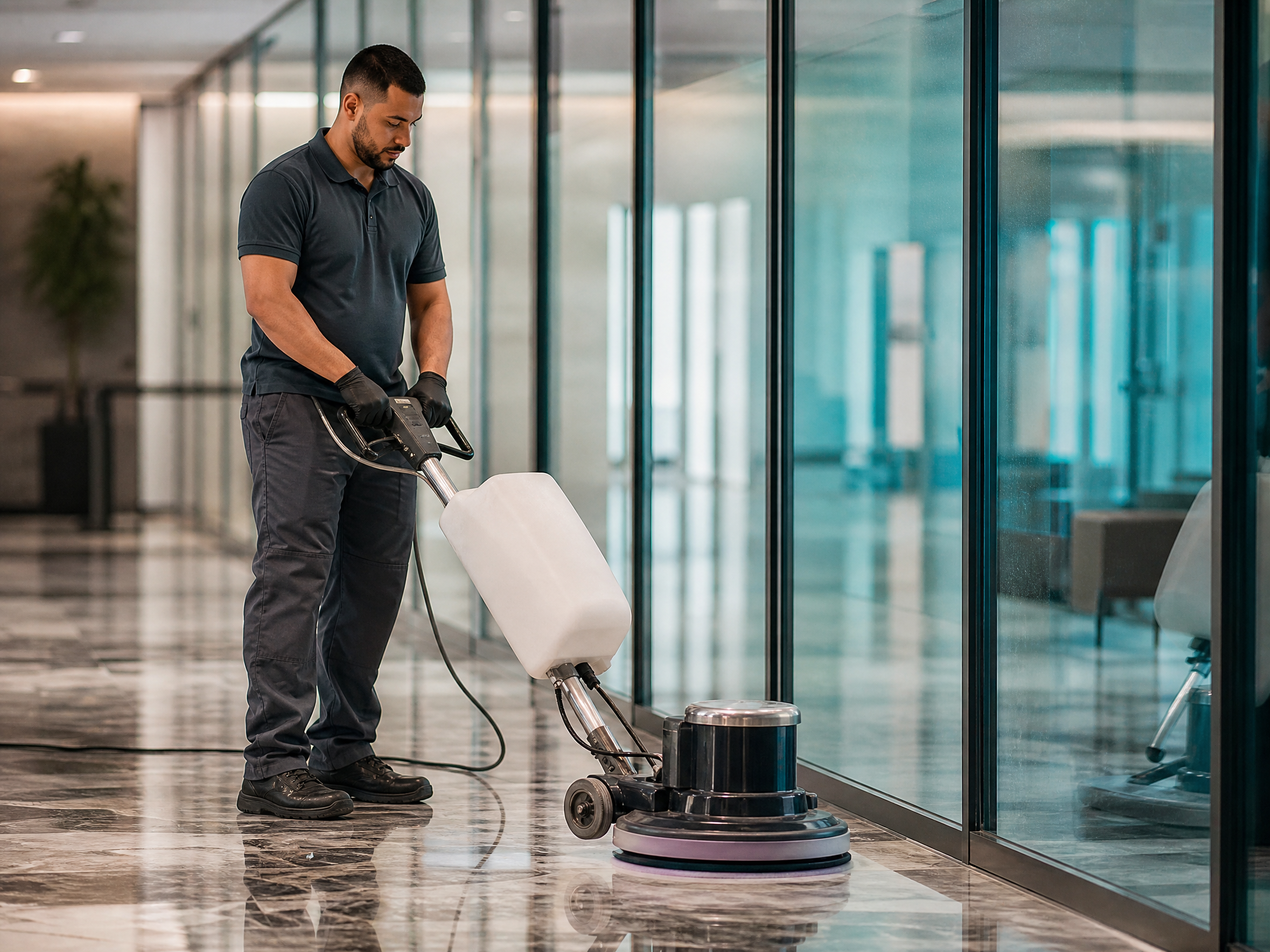
The visible details matter because clients notice the first few steps inside. Glass doors, entry mats, floors, counters, queue rails, seating, brochure stands, and restroom fixtures deserve a repeatable rhythm. The plan should also identify who moves documents, cash, devices, or personal items before service begins. Cleaning staff should work around those materials rather than assuming a surface is available to clear.
For a plan that fits your operation, explore our office cleaning and commercial cleaning coverage in Summerlin.
- Lobby glass, doors, floors, seating, and teller counters.
- ATM surrounds, touchpads, queue rails, and other high-touch public surfaces.
- Private offices, conference rooms, staff kitchens, and restrooms.
- Access windows, alarm procedures, keys, badges, and a designated site contact.
Protect electronics, records, and access controls
ATMs, teller equipment, keyboards, touchscreens, card readers, phones, and security devices need surface-appropriate care. The manufacturer’s instructions should guide product choice and application. A written scope can state which equipment is cleaned by the bank team, which surfaces the janitorial crew handles, and how the two responsibilities are confirmed at handoff.
Security is part of the service design, not an afterthought. Set approved entry times, escort expectations, alarm and lock-up steps, supply-storage rules, and a process for reporting found items or unexpected documents. For sensitive areas, a supervisor check or client sign-off can make the boundary visible without asking cleaners to inspect or handle financial records.
Choose a repeatable plan for Las Vegas operations
Routine cleaning should carry most of the workload: remove soil, dust, fingerprints, and waste; detail high-touch surfaces; vacuum or mop floors with products suited to the finish; and keep restrooms and break areas presentable. If a particular area has been exposed to obvious illness, discuss any additional disinfection step with the facility lead and use a product and method appropriate to the surface and label directions. Fogging and electrostatic spraying should not be treated as a default substitute for surface cleaning.
Las Vegas scheduling may need to flex around branch hours, Saturday appointments, month-end activity, or visitor peaks near major events. Ask for a service plan that defines daily work, periodic floor or glass detail, quality checks, and the communication path for changes. Product preferences can also be discussed, including EPA Safer Choice options where they fit the surface, performance, and facility requirements. Cleaning chemicals still require proper labeling, training, ventilation, and worker protections; specialized work such as hazardous materials or work at height belongs in a separately qualified scope.
Contact Simplicity Commercial Cleaning for a Las Vegas walkthrough and estimate built around your branch layout, security procedures, client traffic, and service priorities.
Request a walkthrough & estimatePut this guidance to work at your facility.
Explore the related Simplicity service and Las Vegas coverage page, then see how the details can fit your space.