
How daytime office cleaning works
Daytime cleaning works best as a sequence of small, predictable zones rather than one crew moving through the entire office at once. A provider can start with reception, restrooms, break areas, or corridors while staff remains focused in other rooms, then move through work areas during agreed low-traffic windows. The walkthrough should identify meeting rooms, private offices, occupied desks, storage areas, and spaces that require an escort or scheduled access.
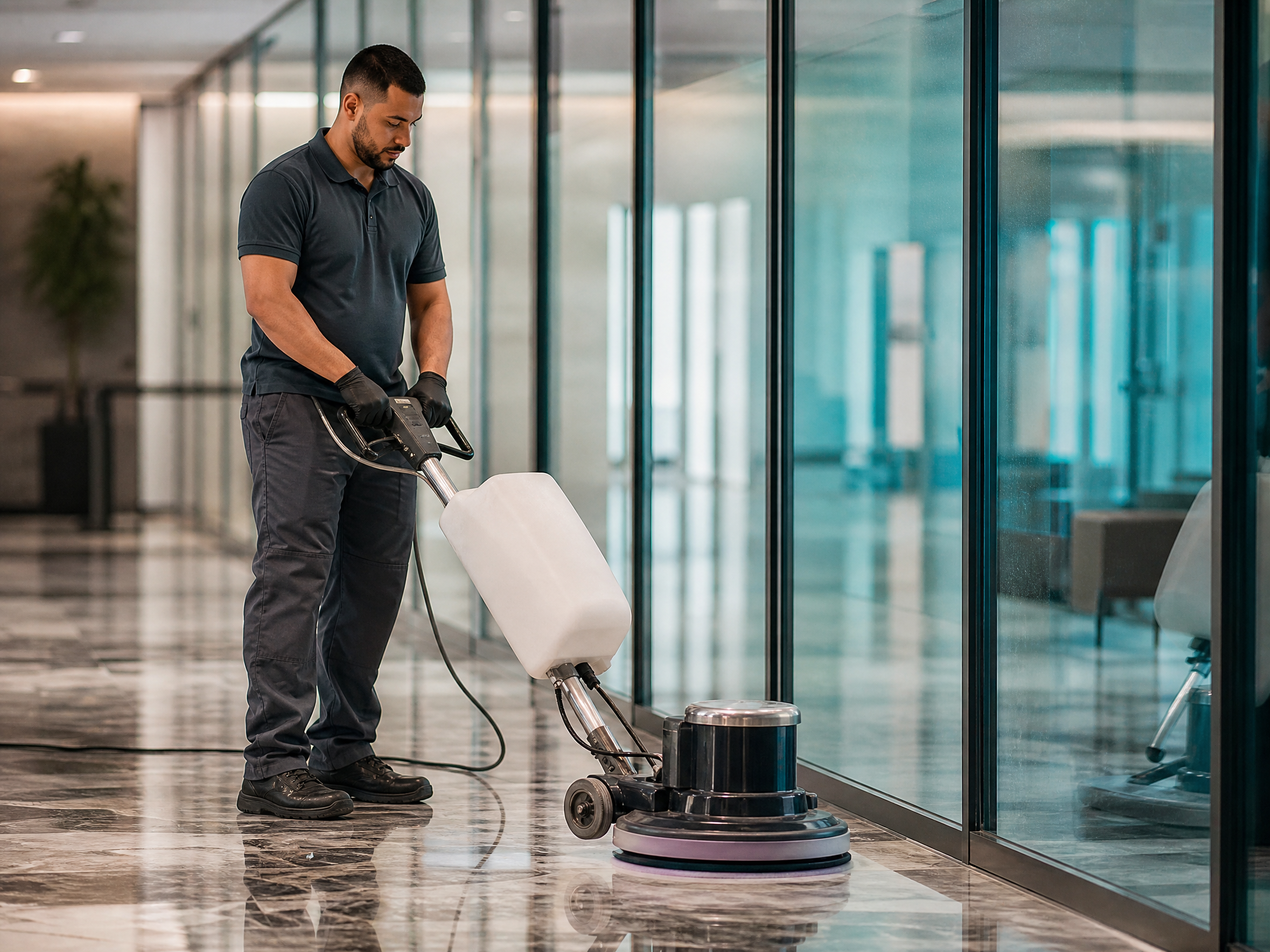
The scope should separate quiet maintenance from work that creates more interruption. Wiping accessible surfaces, emptying approved receptacles, restroom service, and entry detail may fit during the day, while vacuuming, floor machines, carpet extraction, or VCT floor work may belong in a quieter window. The provider should confirm equipment, timing, wet-floor signage, and furniture expectations before the first visit.
For a plan that fits your operation, explore our janitorial services and commercial cleaning coverage in Resort Corridor.
- Create a zone order based on occupancy, meetings, and visitor flow.
- Identify rooms that require permission, escort, or advance notice.
- Schedule louder equipment and wet work around lower-traffic periods.
- Name one office contact for changes, concerns, and access updates.
Protect focus, access, and product boundaries
A daytime crew should work from visible signals and agreed communication rather than interrupting people at random. Door signs, calendar notes, a room-priority list, and a simple skip-and-return process help protect calls and confidential work. Staff should secure sensitive papers and personal items, while the cleaning scope should state whether desk surfaces, electronics, keyboards, and personal workstations are included or excluded.
Cleaning, sanitizing, and disinfecting describe different processes. Routine cleaning removes soil; sanitizing and disinfecting require separate product and process decisions. If a disinfecting task is requested, the provider should document the product, approved surface, label directions, required wet contact time, ventilation, and any applicable protective equipment. OSHA and CDC guidance support training and label-led use; product choices should be reviewed with the provider and facility contact rather than assumed to suit every occupant or surface.
Build a Las Vegas daytime service plan
Las Vegas conditions make entry sequencing especially useful. Windblown desert dust can collect at thresholds, mats, ledges, and corridor edges, so those areas may deserve attention before it spreads through occupied spaces. Shared restrooms and glass can also show mineral spotting when water dries, which makes drying and detail expectations worth adding to the written scope instead of relying on a generic office checklist.
Before service begins, confirm arrival procedures, parking or loading rules, alarm and key control, restroom and breakroom access, supply storage, and the process for areas missed because of a meeting or occupied room. Compare proposals by the daytime tasks included, service frequency, periodic work, communication method, and any after-hours option for disruptive projects. A walkthrough gives the provider the information needed for a realistic estimate.
A staged daytime plan can protect productivity while keeping shared areas cared for. Contact Simplicity Commercial Cleaning for a Las Vegas walkthrough and estimate.
Request a walkthrough & estimatePut this guidance to work at your facility.
Explore the related Simplicity service and Las Vegas coverage page, then see how the details can fit your space.