Start with zones, not one giant checklist
An open-plan floor is faster to clean when it is divided into practical zones: entry and reception, workstations, meeting rooms, circulation paths, break areas, and support spaces. Each zone should have a defined finish point and a route that keeps the cleaner moving forward instead of crossing freshly serviced areas. Note fixed workstations, shared desks, phone booths, storage ledges, and furniture that limits access.
Ask staff to clear personal items, dishes, loose papers, and sensitive materials before service. The cleaning team can then focus on accessible surfaces and floors without moving confidential contents or guessing what belongs at a desk. A site-specific map also makes it easier to change coverage when a team expands, furniture moves, or a meeting area becomes heavily used.
For a plan that fits your operation, explore our office cleaning and commercial cleaning coverage in Summerlin.
- Mark high-use paths, shared tables, reception counters, and collaboration areas.
- Separate daily work from periodic glass, edge, upholstery, and floor-detail tasks.
- Confirm which desks, electronics, and personal areas require owner approval before service.
- Set a route that finishes with floors and exits through the least-used path.
Use a quiet, repeatable cleaning sequence
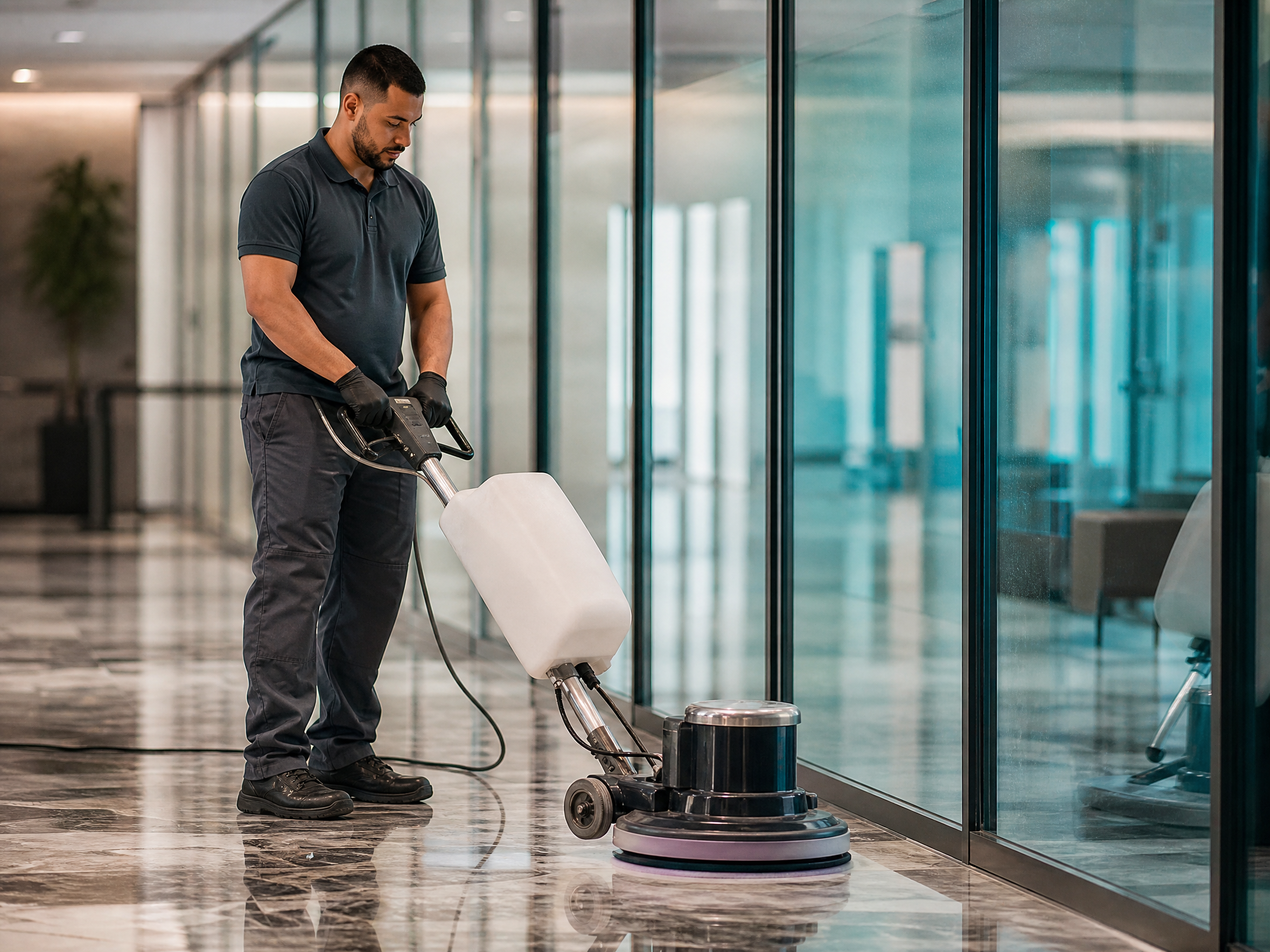
A consistent sequence reduces backtracking and keeps dust from settling onto completed work. Begin by collecting waste and removing items that block access. Dust or wipe higher surfaces before lower ones, clean shared touchpoints with methods suited to the material, then vacuum or mop floors after overhead and surface work is finished. For electronics, follow the device maker’s cleaning instructions rather than applying product directly.
Schedule the loudest or most disruptive tasks around the office’s actual rhythm. A night visit may suit open workstations, while a daytime pass can address a reception area or breakroom during a planned quiet period. High-touch cleaning should be based on use and the facility’s needs; when disinfection is requested, the product label must govern surface suitability, dilution, contact time, ventilation, and protective equipment.
Build the scope around Las Vegas conditions
Entry zones deserve special attention in Las Vegas. Wind and blowing dust can bring fine material through doors and onto mats, lobby flooring, window ledges, and shared corridors. Use a walk-through to identify where grit collects first, then set a practical cadence for mat care, vacuuming, spot removal, and edge detail instead of applying the same frequency to every part of the floor.
Open-plan offices also need clear boundaries between routine commercial cleaning and responsibilities held by building engineering, occupants, or specialized contractors. HVAC service, pest concerns, hazardous spills, clinical work, and damaged finishes should be routed to the appropriate responsible party. Keep chemicals labeled and stored as directed, make relevant safety information available to workers, and document who handles exceptions, access changes, and quality reviews.
A walkthrough can identify traffic paths, shared surfaces, access windows, and Las Vegas dust-control priorities. Contact Simplicity Commercial Cleaning for a Las Vegas walkthrough and estimate.
Request a walkthrough & estimatePut this guidance to work at your facility.
Explore the related Simplicity service and Las Vegas coverage page, then see how the details can fit your space.