Match the routine to the floor
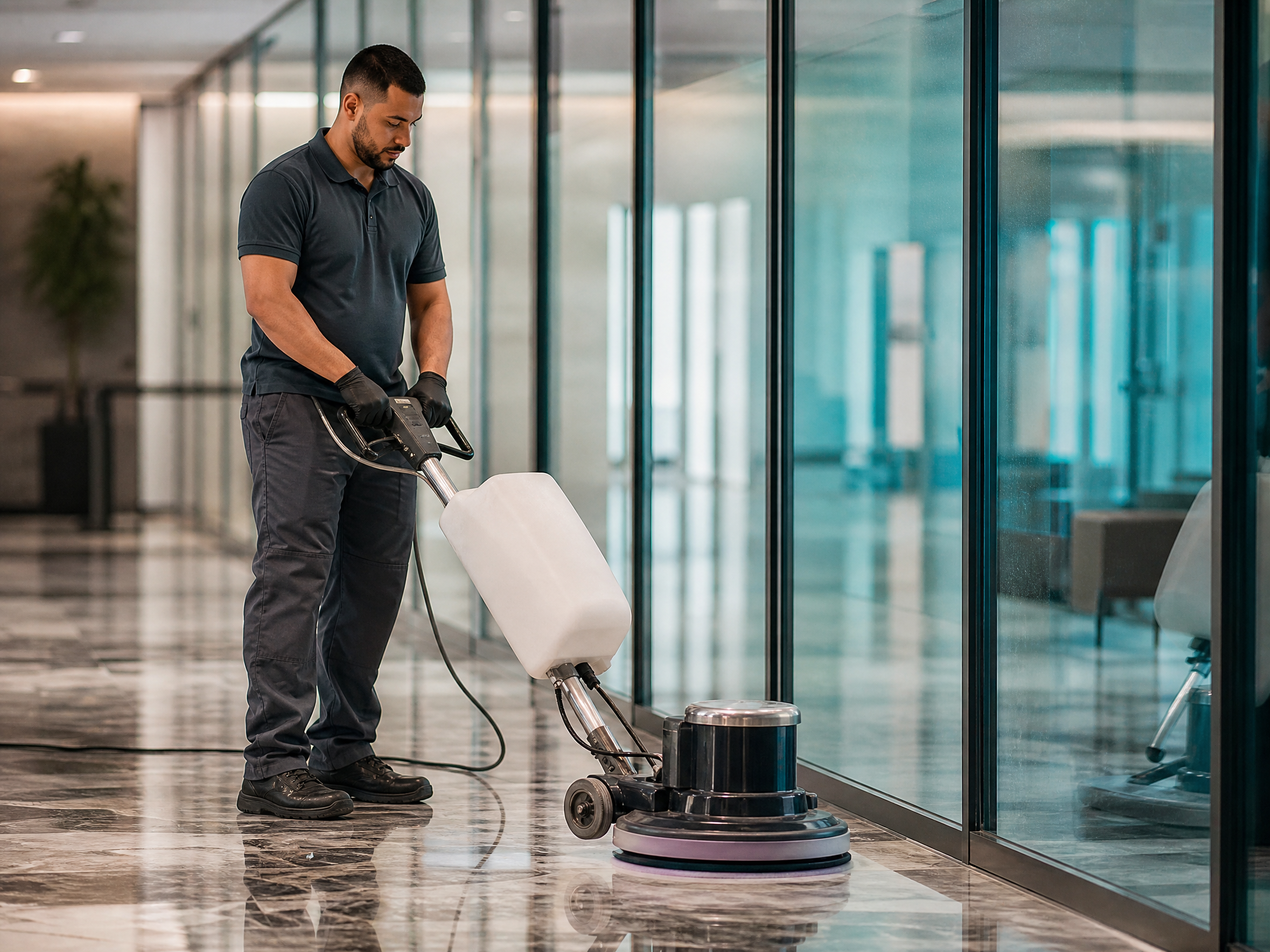
Floor care starts with identifying what is underfoot and what the area is asked to withstand. Carpet needs regular vacuuming, spot response, and periodic extraction when soil builds up. VCT, resilient tile, ceramic tile, sealed concrete, and natural stone each have different finish, pad, and product considerations. A generic mop-and-go routine can leave residue, dull a finish, or move grit across a larger area.
Map the building by traffic rather than treating every room alike. Entrances, elevator lobbies, corridors, reception areas, restrooms, and breakrooms usually need more frequent attention than low-use offices. The written scope should separate recurring cleaning from periodic floor work so facility leaders know what happens each visit and what requires a separately planned service.
For a plan that fits your operation, explore our deep cleaning and commercial cleaning coverage in Henderson.
- Entry mats, vestibules, and the first several feet inside the door.
- High-traffic lanes, elevator lobbies, corridors, and reception areas.
- Restroom and breakroom floors where spills or moisture need prompt response.
- Low-use offices and storage areas that can follow a lighter cadence.
Control Las Vegas dust before it becomes wear
Desert grit does more than make a lobby look untidy. When it is repeatedly tracked across a floor, it can contribute to visible scratching and faster wear in busy paths. Use a layered approach: keep entry mats serviceable, remove dry soil before wet cleaning, and inspect thresholds and corners where debris collects. The right frequency depends on doors, foot traffic, weather, and the building’s operating hours.
Hard water adds a different presentation issue. The Las Vegas Valley Water District describes local water as very hard and notes that mineral residue appears when water evaporates. Floors and adjacent baseboards, restroom edges, and tile surfaces should therefore be cleaned with controlled moisture and left appropriately dry. If a finish is damaged or buildup is deeply established, discuss restoration separately rather than assuming routine janitorial work will reverse it.
Build a scope your team can inspect
A useful floor-care proposal names the materials, areas, frequency, equipment, and access window. It should explain who handles daily spill response, how furniture is moved, whether mats are included, and when periodic work is scheduled. Ask how the provider protects occupied spaces, communicates wet-floor conditions, and documents exceptions that need a manager’s decision.
Routine commercial floor care is not the same as asbestos abatement, flood remediation, biohazard cleanup, or specialized restoration. Healthcare, food-service, industrial, and other regulated environments may also have facility-specific procedures. Keep those responsibilities with the qualified parties and requirements that apply to the site, while the cleaning scope stays clear about the accessible, approved floor work it includes.
For a practical plan, contact Simplicity Commercial Cleaning for a Las Vegas facility walkthrough and estimate that maps your floor types, traffic patterns, and recurring or periodic care needs.
Request a walkthrough & estimatePut this guidance to work at your facility.
Explore the related Simplicity service and Las Vegas coverage page, then see how the details can fit your space.