
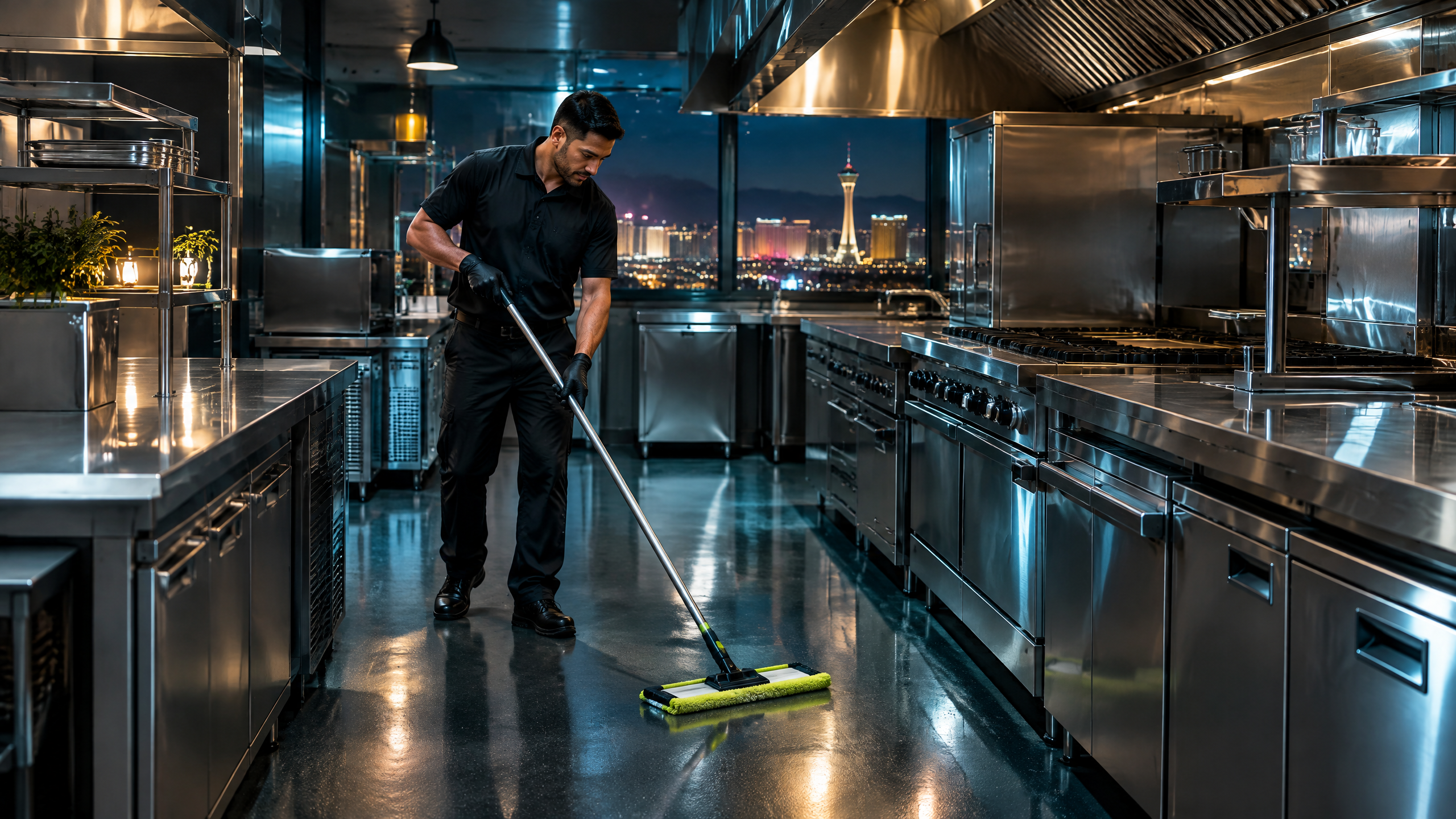
What is the difference between cleaning and sanitizing?
Cleaning removes food, soil, grease, and debris. Sanitizing is a separate step that reduces germs to acceptable levels after the surface has been properly cleaned. Southern Nevada Health District guidance makes this distinction clear for food-contact surfaces: soil must be removed for sanitizer to work effectively.
Your kitchen’s food-safety program should direct food-contact processes, approved products, concentrations, and employee responsibilities. A commercial cleaning provider should understand the boundaries of its service and work around kitchen operations without claiming to replace the operator’s food-safety controls.
For a plan that fits your operation, explore our restaurant cleaning and commercial cleaning coverage in Spring Mountain Chinatown Corridor.
What can a commercial kitchen cleaning scope include?
The answer depends on your layout, service hours, equipment, and who handles daily kitchen duties. Many operators use their staff for immediate food-contact and line-related tasks, while a commercial cleaning team handles scheduled detail work in accessible non-food-contact areas, floors, restrooms, break areas, dining zones, trash routines, and guest-facing spaces.
The scope should identify access limits, equipment exclusions, grease-management responsibilities, floor-care expectations, and the right work window. A vague scope can create problems because one side assumes the other is handling a task.
- Dining area, entry, restrooms, and guest-facing glass.
- Accessible kitchen-adjacent floors and non-food-contact surfaces.
- Trash, break areas, offices, and employee spaces.
- Periodic detail work that is clearly approved and scheduled.
How should Las Vegas kitchens schedule cleaning?
Schedule around production, deliveries, closing, and the next day’s prep. A busy Las Vegas restaurant may have a narrow late-night or early-morning cleaning window, especially when dining volume extends beyond conventional meal periods. The plan needs to be realistic about access, dry time for floors, and which areas remain active.
Also consider visible conditions outside the kitchen. Windblown dust at entries, high traffic in dining areas, and hard-water spotting in restrooms can affect the guest experience even if the kitchen is well managed. A coordinated whole-facility plan keeps those responsibilities from falling through the cracks.
Reach out to Simplicity Commercial Cleaning for a commercial kitchen and restaurant walkthrough plus an estimate that fits your Las Vegas hours, access, and facility priorities.
Request a walkthrough & estimatePut this guidance to work at your facility.
Explore the related Simplicity service and Las Vegas coverage page, then see how the details can fit your space.