
Start where dust enters
The office entrance is the first control point. Inspect walk-off mats, thresholds, door tracks, lobby edges, and the route from parking or sidewalks into reception. Keep mats properly positioned and in usable condition, then schedule extra attention after windy periods or unusually heavy door traffic. Clark County advises keeping doors and windows closed during dust alerts; facility leaders can also coordinate with reception and building management before propping exterior doors open.
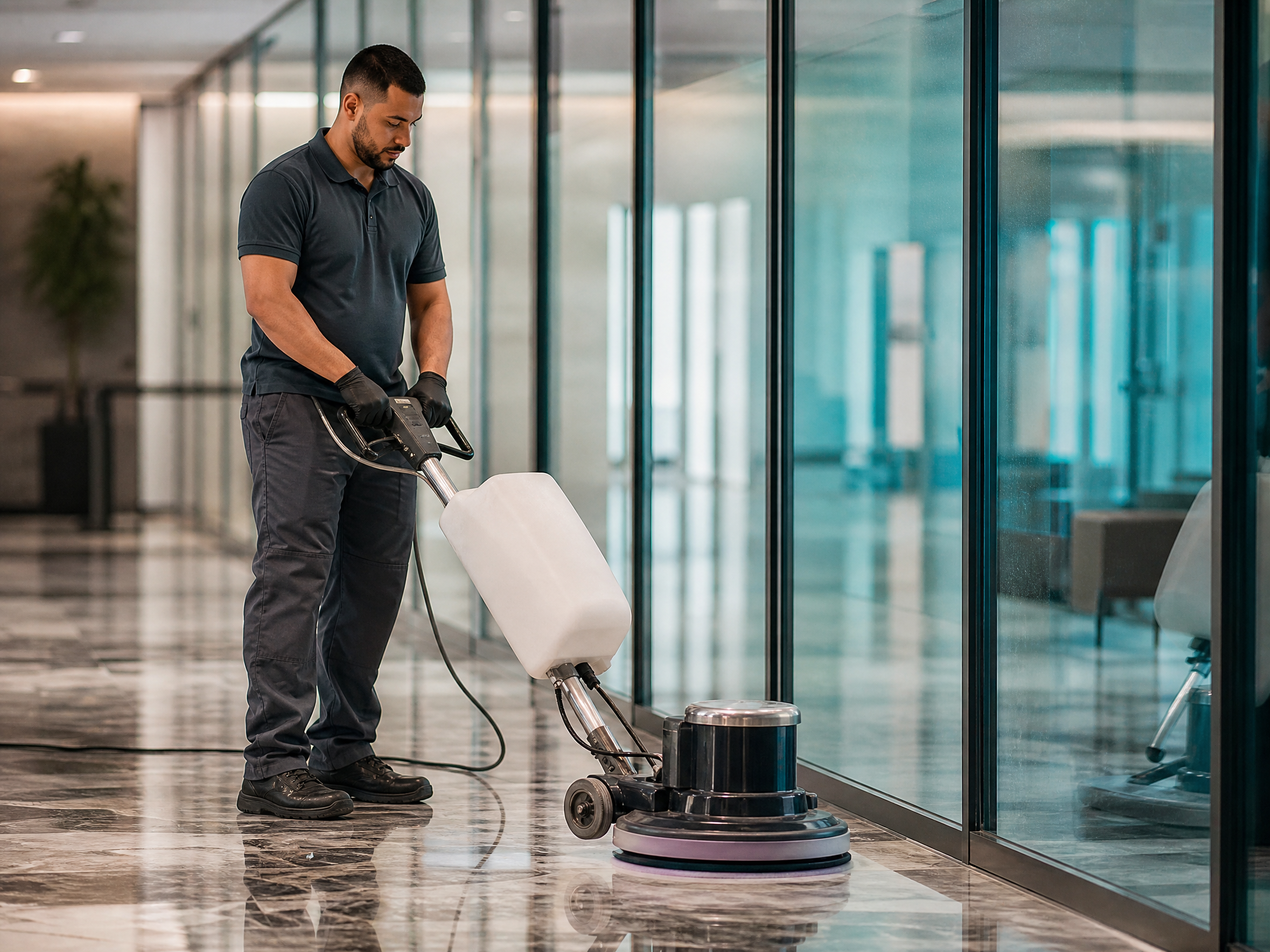
Follow the tracked path rather than cleaning only the center of the room. Vacuum mat edges, corners, and accessible space under furniture with equipment suited to the task, then use a damp method when the surface and product directions allow it. Treat dust collected from construction, renovation, or an unusual building event as a separate scope that may require qualified support beyond routine office cleaning.
For a plan that fits your operation, explore our high-dusting and commercial cleaning coverage in Las Vegas.
- Check mat placement, wear, and edge buildup at the start of the service window.
- Prioritize thresholds, lobby perimeters, elevator approaches, and busy shortcuts.
- Adjust entry attention when weather or occupancy changes the amount of tracked debris.
Follow dust across floors and surfaces
Once particles pass the entry, they settle on horizontal surfaces and move with foot traffic and air movement. Build a rotation for reception counters, window ledges, baseboards, cabinet tops, conference tables, and shared equipment areas. Pair that rotation with floor-edge work, since a quick pass through open floor space can leave the perimeter where dust remains most visible.
Match frequency to the building’s actual use. A ground-floor office near active roads, a visitor-heavy suite, and a lightly occupied upper-floor office can need different attention even when their square footage is similar. Keep staff expectations clear: employees can report a spill or access issue, while the cleaning scope should assign recurring dusting, vacuuming, trash, and approved high-touch tasks to a named team. Use product labels and task-appropriate methods for any chemical or disinfection work.
Coordinate cleaning with building care
Cleaning handles accessible dust on floors, mats, furniture, and common surfaces. It does not replace HVAC inspection, filter changes, blocked-grille corrections, door-seal repairs, or building-envelope work. EPA describes source management, ventilation, and filtration as complementary indoor-air strategies, so a recurring dust pattern near a return, supply grille, ceiling space, or damaged entry should be documented and shared with property or HVAC personnel.
Use a simple log to connect conditions with service: date, weather, entry activity, location, visible buildup, and action taken. Ask the cleaning provider and building team to review that record during walkthroughs, especially after renovations, landscaping work, tenant moves, or changes in access hours. A written scope can then separate every-visit work from periodic detail and identify which building-side tasks need a different specialist.
If dust keeps returning to your office entry, floors, or shared spaces, contact Simplicity Commercial Cleaning for a Las Vegas walkthrough and estimate tailored to your facility.
Request a walkthrough & estimatePut this guidance to work at your facility.
Explore the related Simplicity service and Las Vegas coverage page, then see how the details can fit your space.