
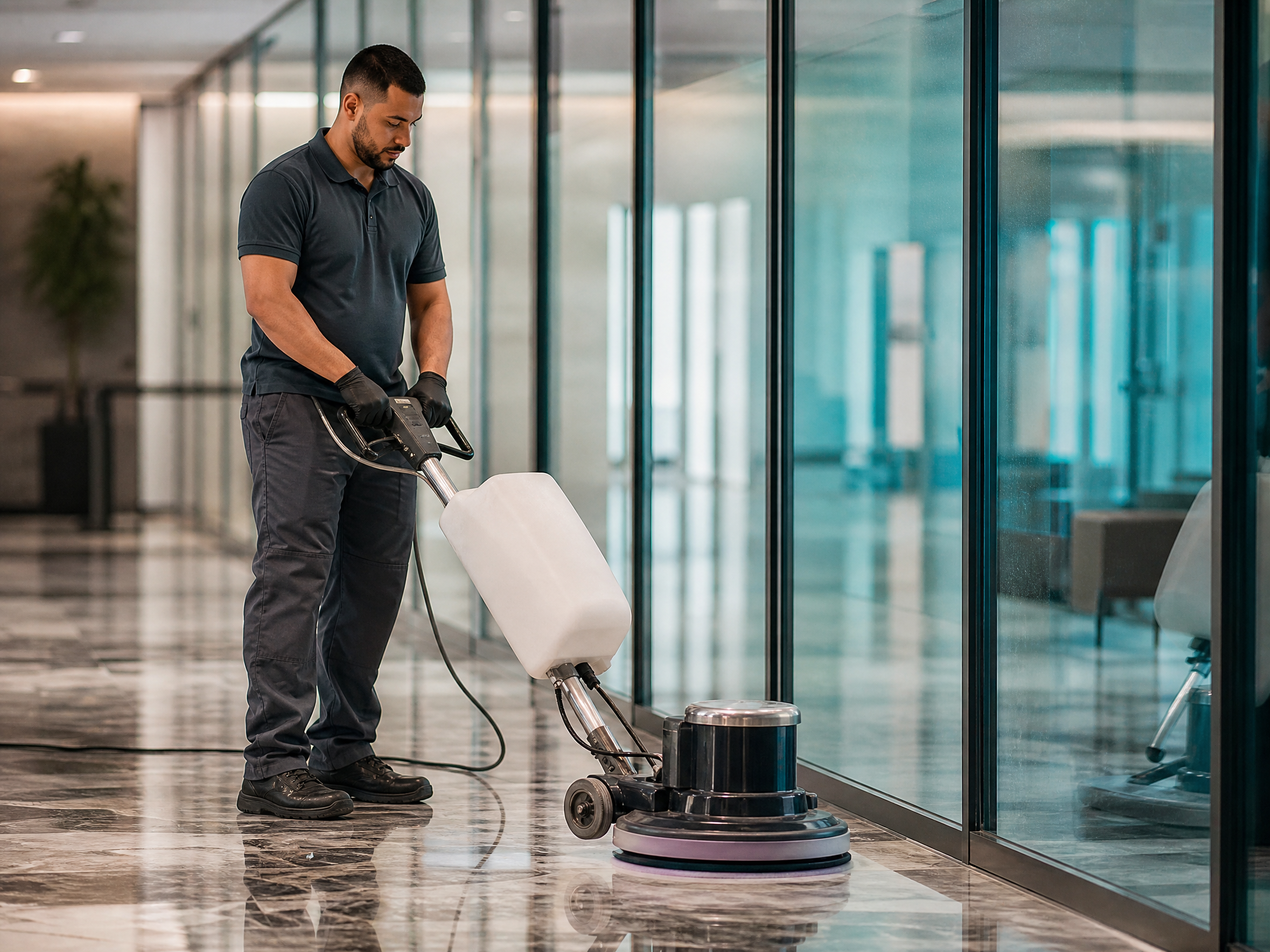
Start with the surfaces that affect daily movement
Warehouse cleaning is more than sweeping an open floor. A practical scope follows the movement of people, pallets, carts, and products through receiving, storage, picking, packing, and shipping. Aisles, crossovers, dock approaches, stairways, restrooms, breakrooms, and office areas each need a defined routine so dust, scraps, and spills are addressed before they become a recurring distraction.
Floors deserve special attention because loose debris, wet spots, damaged surfaces, and clutter can interfere with walking and material-handling traffic. OSHA requires workplaces and walking-working surfaces to be kept clean and orderly, with floors kept clean and, when feasible, dry. Cleaning teams can support that standard by reporting leaks, damaged flooring, blocked routes, and other conditions to the facility contact rather than treating them as ordinary dirt.
For a plan that fits your operation, explore our warehouse cleaning and commercial cleaning coverage in Blue Diamond Industrial Corridor.
- Sweep or vacuum travel lanes, staging areas, and dock thresholds on a schedule matched to traffic.
- Detail corners, racking edges, ledges, vents, and other places where dust settles.
- Keep restrooms, breakrooms, lockers, and warehouse offices on a separate visible checklist.
- Document spills, leaks, damaged surfaces, blocked aisles, and access concerns for the facility team.
Build the plan around Las Vegas conditions
Las Vegas is a desert valley where strong winds can bring blowing dust and sand. That makes dock doors, vehicle entrances, pedestrian doors, mats, and the first several feet of interior flooring important inspection points. During windy periods, a warehouse may need extra entry attention and more frequent vacuuming rather than simply adding a large periodic deep clean.
Local water is categorized as very hard, and mineral residue can leave chalky buildup on fixtures or spots on glass when water evaporates. In warehouse restrooms, break areas, and office kitchens, a scope should include appropriate drying and detail work. Product selection and dwell times should follow the label and the surface manufacturer’s guidance, especially around finished concrete, resilient flooring, painted walls, and sensitive equipment.
Set boundaries before service begins
A walkthrough should map operating hours, forklift and pedestrian routes, dock activity, security procedures, floor types, storage restrictions, and areas that require an escort. Ask the provider to distinguish recurring cleaning from periodic floor care, post-spill response, waste handling, and tasks that belong to maintenance or a trained specialist. This keeps the service useful without creating confusion about who owns a higher-risk condition.
Work-at-height tasks, chemical spills, regulated waste, and product contamination require separate evaluation and appropriate controls. A janitorial crew should not be expected to enter a restricted area, move stored inventory, operate warehouse equipment, or handle hazardous material simply because it appears on a checklist. Agree on communication, scheduling, quality checks, and escalation steps before the first visit so the cleaning plan supports production instead of interrupting it.
A walkthrough can identify dust-entry points, traffic-heavy floors, dock details, and the boundaries that belong with other specialists. Contact Simplicity Commercial Cleaning for a Las Vegas walkthrough and estimate.
Request a walkthrough & estimatePut this guidance to work at your facility.
Explore the related Simplicity service and Las Vegas coverage page, then see how the details can fit your space.