
Coordinate before anyone starts cleaning
Forklift safety belongs to the facility’s operations team, not to a cleaning checklist. Before service begins, the warehouse leader should explain the approved pedestrian walkways, equipment aisles, crossing points, restricted zones, radio or hand-signal practices, and the procedure for stopping work when traffic changes. Cleaning staff should follow those site rules and should never direct forklift operators or alter traffic controls.
Set the service window with the people who control receiving, picking, loading, and forklift movement. A quiet overnight period may help, but it is not automatically clear of traffic. Confirm who gives the release to enter an area, how a cleaner reports a spill or obstruction, and whether a spotter or escort is required by the facility’s protocol. OSHA guidance emphasizes separating pedestrians from lift trucks where possible and keeping aisles and passageways free of obstructions.
For a plan that fits your operation, explore our warehouse cleaning and commercial cleaning coverage in Blue Diamond Industrial Corridor.
- Review the site map, marked walkways, crossings, dock zones, and emergency routes.
- Confirm the facility contact who authorizes access to active work areas.
- Use the warehouse’s required radio, sign-in, escort, and stop-work procedures.
- Keep cleaning carts, cords, hoses, cones, and waste containers outside forklift travel paths.
Manage wet floors, dust, and cleaning equipment
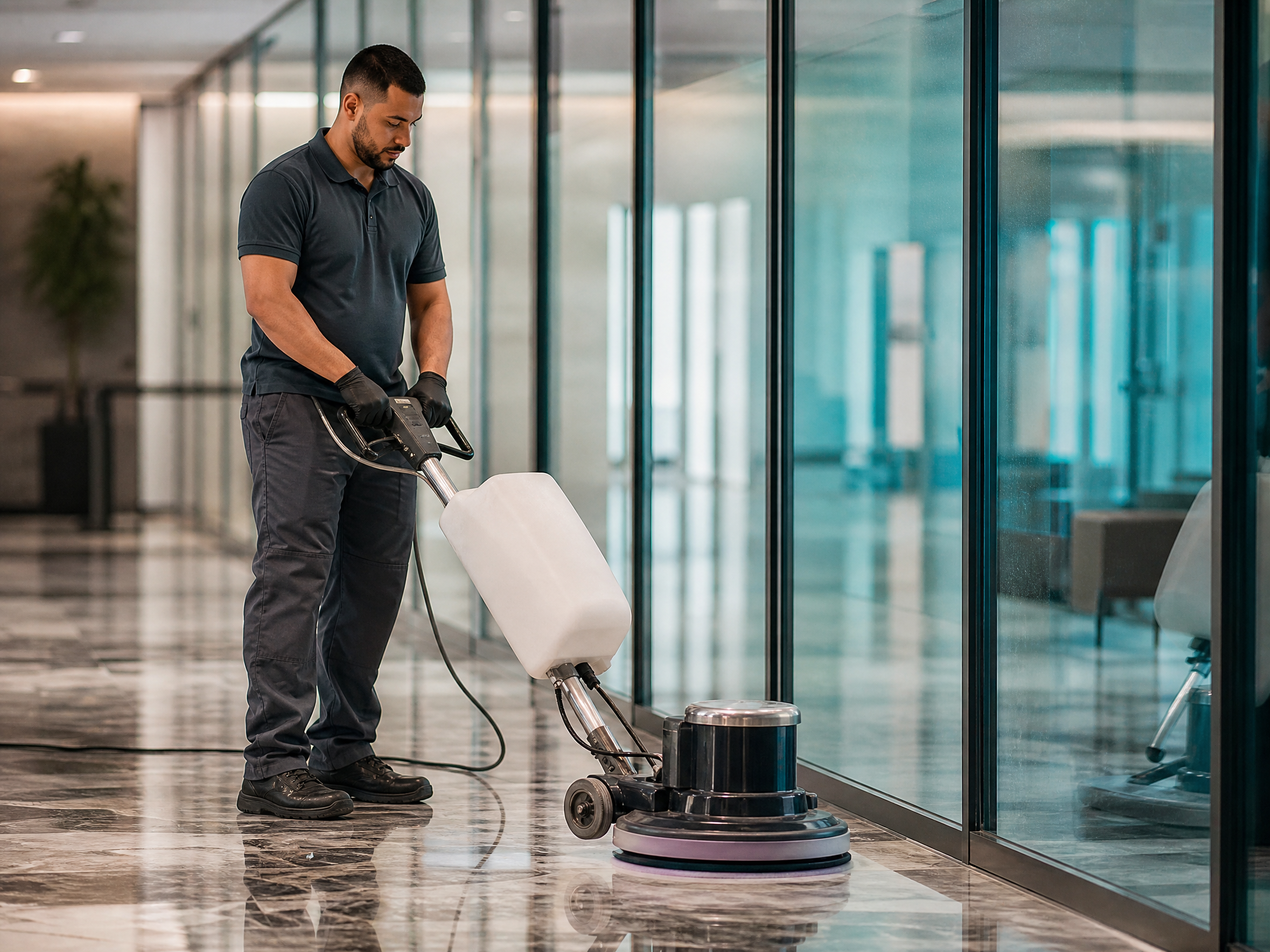
Wet or slippery floors require deliberate coordination because forklift operators must adjust to travel conditions. Use the facility-approved method for marking or isolating a wet area, and tell the designated warehouse contact before starting work. Do not leave a mop bucket, auto-scrubber, extension cord, hose, or loose debris where a truck or pedestrian could encounter it. The cleaning team should remove or secure equipment as soon as a task is complete.
Las Vegas dock doors and exterior transitions can bring dust and grit into warehouse paths, while hot outdoor conditions can make scheduling and drying time different from an office setting. Address entries, dock-adjacent floors, corners, and edges in a sequence that fits loading activity. Cleaning can improve surface condition and visibility, but it does not replace inspections, operator judgment, maintenance, or the warehouse’s traffic program.
Define roles and review the plan
Every warehouse should make the division of responsibility explicit. Facility leaders control forklift routes, operator authorization, traffic rules, and the decision to pause or reroute work. Operators follow their training and the site’s operating procedures. Cleaning personnel stay within their assigned scope, remain alert to moving equipment, and report changing conditions instead of improvising around them.
Review the arrangement after a layout change, new racking, a shift change, an incident or near miss, or a change in cleaning equipment. OSHA’s powered industrial truck standard includes workplace conditions such as surface conditions, pedestrian traffic, narrow aisles, and other unique hazards in operator training topics. A short walkthrough with the warehouse contact can keep the cleaning scope aligned with the current operation without presenting the cleaning company as the authority over forklift controls.
For a practical scope built around your aisles, dock activity, floor conditions, and access procedures, contact Simplicity Commercial Cleaning for a Las Vegas walkthrough and estimate.
Request a walkthrough & estimatePut this guidance to work at your facility.
Explore the related Simplicity service and Las Vegas coverage page, then see how the details can fit your space.