
The people behind office cleaning
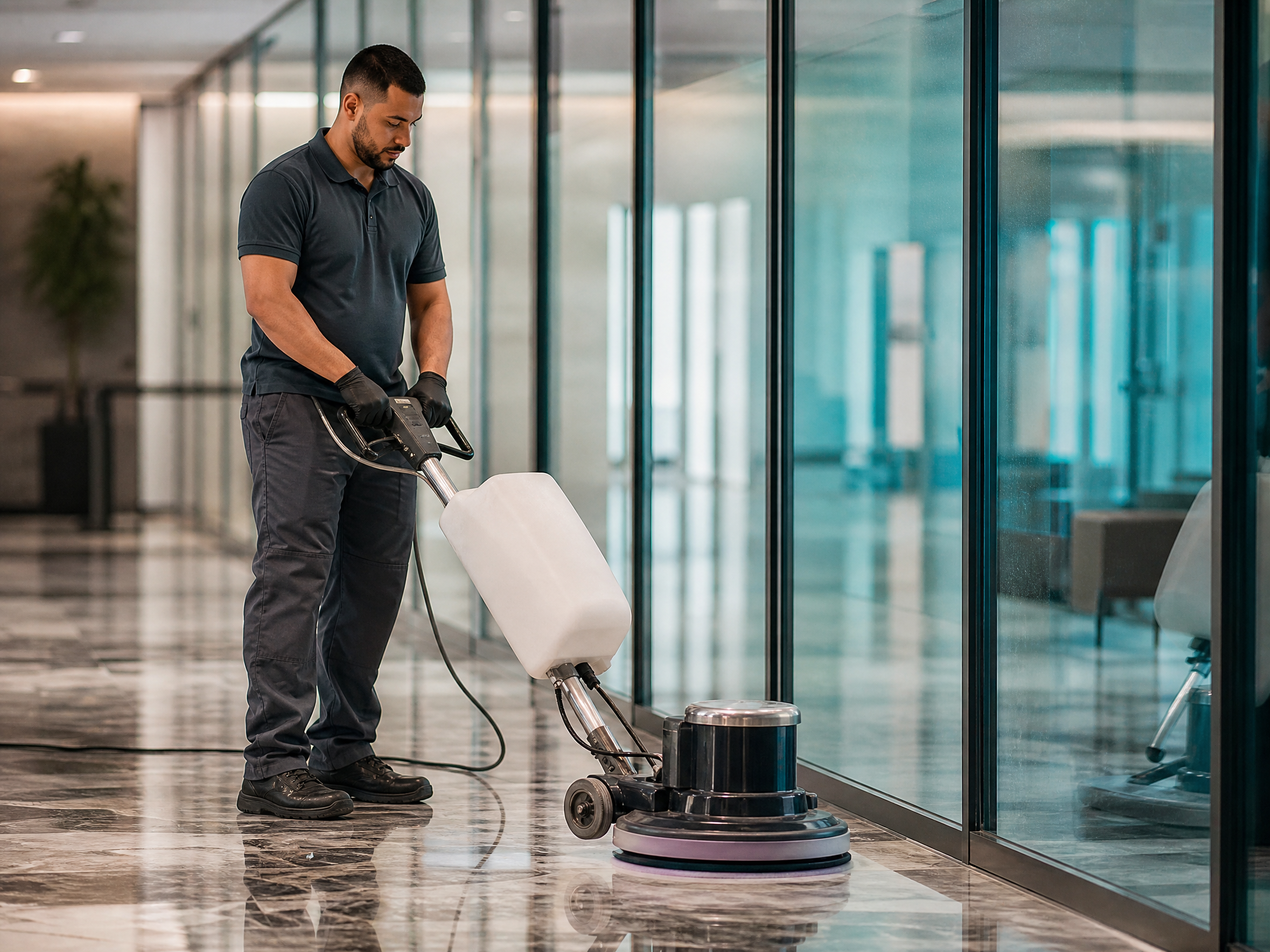
The hands-on work is usually performed by janitors or building cleaners. Their recurring duties can include emptying waste, vacuuming or mopping floors, cleaning restrooms, restocking supplies, wiping reachable surfaces, and reporting conditions that need building-side attention. Some offices hire this team directly, while others contract a commercial cleaning company that recruits, schedules, trains, and supervises the crew.
A day porter may cover visible daytime needs while employees and visitors are present. That role can include restroom checks, spill response, entryway touch-ups, waste attention, and keeping shared areas presentable between evening cleaning visits. A porter is not automatically a substitute for a full janitorial scope, so the proposal should state which tasks happen during the day and which are assigned to the after-hours team.
For a plan that fits your operation, explore our office cleaning and commercial cleaning coverage in Summerlin.
- Janitors or building cleaners handle recurring floor, restroom, waste, and surface work.
- Day porters respond to daytime conditions in entrances, restrooms, breakrooms, and shared areas.
- Supervisors or account managers coordinate staffing, inspections, supply questions, and service communication.
Who sets the scope and schedule
The facility leader, property manager, or office operations contact usually defines what the building needs and when cleaners can work. That person can identify occupied zones, security procedures, tenant restrictions, supply ownership, special finishes, event dates, and contacts for leaks, damage, or maintenance concerns. The cleaning provider then turns those conditions into a written scope with frequencies and service windows.
A useful scope separates every-visit work from periodic tasks. Daily or recurring service may cover restrooms, trash, floors, breakrooms, and shared surfaces, while carpet extraction, machine scrubbing, high dusting, interior glass, and detailed edge work may be scheduled by condition or on a longer rotation. Clear ownership matters: cleaning staff can document a failed fixture or access problem, but repairs and building-system work belong with the appropriate property or maintenance team.
How to choose the right cleaning setup
Start with a walkthrough rather than choosing only by building size. Note the number of entrances, carpet and hard-floor types, restroom count, breakrooms, conference spaces, elevators, tenant suites, loading areas, and spaces that cannot be entered during business hours. Ask how the provider assigns backup coverage, handles missed tasks, documents inspections, and communicates a change in access or occupancy.
Las Vegas conditions make the entry route and service window especially important. Desert dust can collect at mats, thresholds, lobby edges, and lower ledges, while mineral spotting may show on restroom fixtures or glass. A practical plan matches attention to traffic and weather, protects tenant privacy, and schedules louder or more disruptive work when occupants and building security can accommodate it. Compare proposals by included tasks, frequencies, exclusions, supervision, and response process rather than by a single monthly number.
Contact Simplicity Commercial Cleaning for a Las Vegas walkthrough and estimate that maps janitorial, porter, periodic, and facility-coordination needs to your building.
Request a walkthrough & estimatePut this guidance to work at your facility.
Explore the related Simplicity service and Las Vegas coverage page, then see how the details can fit your space.